Planner SVG Bundle: A Designer’s Real-World Embroidery Review
First Impression: Clean, Calm, and Craft-Ready
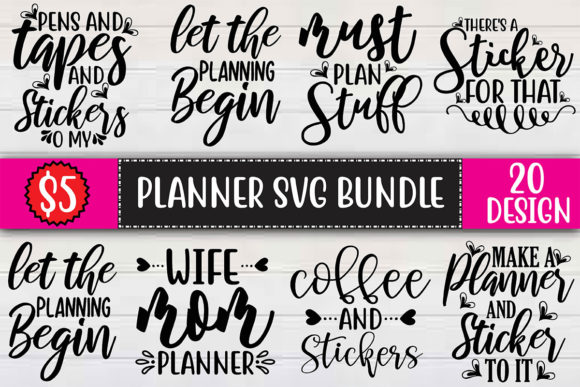
Opening the Planner SVG Bundle feels like unboxing a well-organized creative toolkit—not flashy, but quietly confident. The 20 designs lean into soft geometry, gentle line work, and intentional negative space. Think minimalist calendar icons, subtle checklists, delicate pencil silhouettes, and tiny notebook motifs—not fussy, not overcrowded. As an embroidery designer who’s stitched hundreds of planner-themed items for Etsy sellers and boutique clients, I immediately sensed this bundle speaks to intentionality over ornamentation. It doesn’t shout. It invites. That calm visual tone translates beautifully to embroidered tote bags, linen tea towels, and baby onesies—items where clarity and quiet charm matter more than bold impact.
Stitching It Out: Where Planner SVG Bundle Shines (and Where It Needs Care)
I tested three designs from the Planner SVG Bundle on a mid-weight cotton twill tote, a brushed poly-cotton sweatshirt, and a lightweight muslin baby bib. On the tote? Crisp, legible, and perfectly balanced—ideal for a small-batch shop selling “organized mama” gifts. The satin stitch outlines held clean edges, and the fill stitch density felt moderate—not so light it vanished, not so heavy it buckled the fabric. On the sweatshirt, I used medium tear-away stabilizer and saw no puckering; the designs scaled well at 3.5" wide without losing definition.
But here’s where real-world judgment kicks in: that tiny “notes” icon with fine cross-hatching? Gorgeous as a PNG—but in machine embroidery design, those thin lines risk disappearing on stretchy or textured fabrics unless digitized with extra care. I’d avoid using it below 2.75" on a curved surface like a cap, or on dark fabric without high-contrast thread colors. And while the bundle includes AI and EPS files—great for vector editing—the actual embroidery file quality depends entirely on how well each design was digitized. Since no stitch count or digitizing notes are included, I always run a test sew-out first.
Fabric & Function: Matching Design to Real-Life Use
Planner SVG Bundle works best when its quiet confidence aligns with the product’s purpose. It’s ideal for:
- Personalized gifts—think embroidered pillow covers for new grad planners or linen napkins monogrammed with a subtle “2025 Goals” motif;
- Small shop merchandise—a set of four coordinating tea towels, each featuring one design from the bundle, creates cohesive branding without looking templated;
- Baby and nursery items—the soft shapes read as sweet, not cutesy, making them perfect for organic cotton blankets or embroidered onesie pockets;
- Commercial embroidery projects—especially for wellness studios, therapy practices, or productivity coaches wanting tasteful, non-corporate-branded apparel.
Where it needs thoughtful handling: dense woven fabrics like denim (check stitch density before hooping), ultra-thin silk-blends (add cut-away stabilizer), and layered garments like hoodies with thick seams (reposition the hoop carefully to avoid distortion). Also—tiny lettering in any of the designs? Test it at your smallest reliable hoop size. If it’s under 1/4", consider simplifying or omitting for clarity.
What This Bundle Adds to Your Handmade Product—and What It Doesn’t
Planner SVG Bundle elevates perceived value without demanding premium pricing. Customers notice the restraint: no glitter fonts, no overworked shadows, no visual noise. That subtlety reads as professional, considered, and handmade—not mass-produced. For Etsy sellers, that translates directly to higher trust and better reviews (“Exactly as pictured,” “So well-stitched,” “Perfect for my planner-loving sister”).
It also supports brand consistency. Because the 20 designs share rhythm, weight, and spacing, they layer naturally into collections—say, a “Planner Essentials” line of embroidered patches, digital mockups, and printable stickers. But remember: this is a design asset, not a finished embroidery file. You’ll still need to digitize each SVG for your machine, adjust for fabric type, and confirm licensing terms before selling finished products or reselling the files. Bundles like this save time sourcing, but never skip due diligence on commercial use rights.
Practical Notes Every Embroidery Designer Should Run Through
- Test on scrap fabric first—especially if stitching on textured or dark material;
- Check thread color contrast—light gray on heather charcoal can vanish; try navy or charcoal thread instead;
- Review stitch density visually—zoom in on the PNGs to spot tight corners or overlapping fills that may cause thread breaks;
- Confirm hoop size compatibility—some designs may need repositioning for 4x4 hoops;
- Inspect small details—like dotted lines or micro-icons—under magnification before finalizing;
- Mock it up in black and white—this reveals contrast issues invisible on screen;
- Use proper stabilizer—lightweight cut-away for knits, tear-away for stable wovens;
- Verify commercial license terms—since this is a Bundles offering, confirm whether resale of finished embroidered items is permitted;
- Compare light and dark fabric backgrounds—some motifs gain warmth on oatmeal linen, others pop on indigo denim.
Final Thought: A Thoughtful Tool, Not a Magic Fix
The Planner SVG Bundle won’t transform a rushed project into a masterpiece—but in the hands of a careful designer, it becomes a reliable, elegant foundation. It fits naturally into slow-made, values-driven craft businesses: the kind that sell embroidered aprons to teachers, custom sweatshirts to study groups, or personalized baby blankets to new parents building routines. Its strength isn’t in complexity—it’s in cohesion, calm, and quiet craftsmanship. Use it intentionally, test it thoroughly, and let its simplicity do the talking. That’s how good design earns repeat customers—and why this bundle stays open on my desktop more often than I expected.