Unicorn SVG Bundle 2: A Designer’s Real-World Embroidery Review
First Impressions: Whimsy That Stitches Well
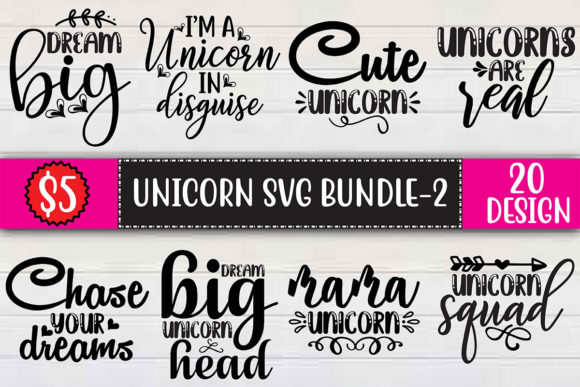
Opening Unicorn SVG Bundle 2, I wasn’t just scanning files—I was asking, “Will this hold up on a real embroidered tote bag for a boutique client?” The collection delivers 20 distinct unicorn motifs: some minimalist and line-based, others rich with layered manes and subtle gradients in the vector outlines. What stands out immediately is the intentional balance between charm and craft—none feel overly cutesy or cartoonish in a way that would age poorly on apparel. These aren’t clipart knockoffs; they’re design assets built for translation into thread.
Real Project Test: A Custom Baby Blanket for a Nursery Launch
I used one of the medium-scale unicorns (a side-profile with soft horn curve and gentle mane swirl) as the centerpiece for a custom baby blanket—cotton knit, lightweight stabilizer, 4×4 hoop. The result? Clean satin-stitched edges, no skipped stitches, and excellent fill-stitch consistency across the body. Because the shapes avoid razor-thin lines and micro-details, the embroidery stayed crisp even at 3.5 inches wide. Parents responded strongly—not just to the theme, but to how *finished* it looked. That matters: when you’re selling handmade nursery decor, perceived quality directly impacts trust and pricing confidence.
Where Unicorn SVG Bundle 2 Shines—and Where It Needs Thought
This bundle excels in projects where personality meets practicality:
- Custom apparel: Works beautifully on sweatshirts and structured tote bags—the designs have enough weight and contour to read clearly without overscaling.
- Baby embroidery: Several motifs are simplified just right for onesies and burp cloths, avoiding dense fill areas that could irritate delicate skin.
- Embroidered patches: The clean outer paths and consistent stroke weights make them ideal for iron-on or sew-on patches—no jagged vector artifacts to confuse your digitizing software.
- Holiday and gift embroidery: One motif features a wreath-integrated unicorn—perfect for Christmas tea towels or Easter pillow covers without needing extra layout work.
- Etsy listings and small shop products: The variety lets you create cohesive collections (e.g., “Magical Morning” apron + matching kitchen towel + baby cap), reinforcing brand storytelling through design continuity.
Use With Intention—Not Just Enthusiasm
Not every unicorn here is hoist-and-stitch ready for all fabrics and hoops. Here’s where attention pays off:
- Small hoop sizes: Three of the more intricate designs include tight inner loops (mane curls, horn spirals). Test those first on scrap fabric—if your machine struggles with rapid direction changes, simplify or resize.
- Textured or stretchy fabric: On slubbed linen tea towels or ribbed cotton caps, opt for the bolder, less-detailed unicorns. Fine-line elements can blur or distort if stabilizer isn’t precisely matched.
- Dark fabric backgrounds: The PNGs with transparent background are invaluable for mockups—but remember: white thread on black fabric needs slightly higher stitch density to avoid shadowing. Check fill coverage before finalizing.
- Curved surfaces (like caps): Avoid the widest, flattest profiles. Choose side-facing or upright unicorns with vertical emphasis—they adapt better to crown curvature.
- Frequent-wash items: For baby blankets or kitchen towels, steer clear of designs with ultra-fine running-stitch accents (e.g., tiny stars scattered around the base)—they’re charming in vector form but can fray or loosen over time.
Design Assets That Support Your Craft Business
What makes Unicorn SVG Bundle 2 valuable beyond the files themselves is how thoughtfully it supports workflow. Having SVG, EPS, AI, DXF, and PNG versions means I can quickly prep for different uses: AI for precise color separation, DXF for laser-cut appliqué templates, PNG for social mockups, SVG for Cricut users who also embroider. That flexibility saves hours when juggling Etsy orders, craft fair inventory, and client revisions.
For digital product sellers, these files are licensable foundations—not just for embroidery, but for printable wall art, sticker sheets, or sublimation-ready layouts. Just confirm the license terms before bundling them into your own digital shop offerings.
Practical Designer Notes Before You Stitch
Before committing to a client project or production run:
- Test the design on scrap fabric that matches your final substrate—especially for nap, stretch, or weight.
- Review stitch density in your embroidery software. Some motifs may benefit from a 5–10% density reduction on lightweight knits.
- Confirm hoop size compatibility—don’t assume all 20 fit comfortably in a 4×4; measure the bounding box in your vector editor first.
- Inspect corners and curves at 400% zoom. Look for unintentional overlaps or open paths that could cause jump stitches.
- Run black-and-white mockups. Does the silhouette hold up? If it reads well in grayscale, it’ll translate reliably across thread colors and fabric tones.
- Use tear-away stabilizer for stable wovens, cut-away for knits—and always match stabilizer weight to your top thread choice.
- Verify commercial use rights. Since this is a Bundles-category product, double-check whether resale of finished embroidered items is permitted (most are, but not all).
Final Thought: Design That Earns Its Place
Unicorn SVG Bundle 2 doesn’t try to be everything—it’s focused, versatile, and quietly professional. It’s the kind of embroidery file that helps your handmade product feel intentional, not incidental. Whether you’re stitching a birthday gift for a five-year-old or launching a boutique line of magical kitchen textiles, these unicorns land with sincerity, not saturation. They support your voice as a maker instead of drowning it in trend-chasing clutter. And in craft business terms? That’s not just nice to have—it’s what keeps customers coming back for the next season’s story.